.png)
10 Best Lead Generation Tools for SaaS and Software Companies
Traffic alone doesn’t guarantee results. Many SaaS companies attract consistent visitors yet struggle with low conversions and unstable pipelines. The issue is rarely demand itself, but how it’s captured.
Static forms often fail to engage, and high-intent users drop off before converting. In SaaS marketing, this gap widens with product complexity.
That’s why improving lead generation for SaaS companies requires more adaptive approaches. In this guide, we’ll explore tools and show how to generate leads for software companies more effectively.
What Is Lead Generation for SaaS Companies?
Lead generation for software companies is the process of turning visitors into qualified prospects who can move through a structured sales funnel.
In B2B SaaS, the process involves more variables than in simpler markets. Decisions are rarely made by one person, and product evaluation often includes integrations, data handling, and scalability.
We’ve seen that leads often reach this stage with interest but slow down when these aspects are not clarified upfront. Because of this, lead generation for B2B software companies requires early interactions to capture enough detail to understand whether a lead fits the product and how close they are to a decision.
To manage this process effectively, SaaS companies rely on a clear marketing funnel that tracks how users move from initial interest to evaluation and purchase decisions.

A well-structured SaaS marketing funnel helps:
- identify bottlenecks in the conversion process,
- qualify leads more accurately,
- reduce drop-offs between stages,
- understand how ready a prospect is to buy.
It shows where users lose interest, where information is missing, and how intent changes between steps. Without that structure, leads enter the pipeline but don’t move forward.
Key Challenges in SaaS Lead Generation
Even with well-defined B2B SaaS lead generation strategies, growth is hard to sustain. Competition increases acquisition costs and reduces the impact of standard campaigns.
The sales cycle adds delay. Decisions stretch over time, often paused by internal discussions or technical checks that are not visible at the first interaction.
Conversion depends on clarity. Landing pages that don’t answer key questions or require too much effort lead to drop-offs, even when traffic is relevant.
Lead quality creates additional load. A large share of contacts lacks real intent, which forces manual filtering. In many cases, automation helps with sorting, but its accuracy depends on how consistent the input data is. AI lead qualification improves prioritization, yet some level of manual review still remains part of the process.
Types of Lead Generation Tools for Software Companies
SaaS lead generation tools are not interchangeable. Each category addresses a specific stage, from initial capture to lead processing and activation. While some platforms combine multiple functions, their roles remain distinct.
Forms & Landing Builders
Capture incoming traffic through structured pages, embedded forms, and pop-ups. They control how information is presented, which fields are required, and how much detail is collected at the first interaction, directly affecting completion rates and data quality.
CRM Systems
Store and organize lead data after capture. They track interactions across channels, segment contacts based on attributes or behavior, and provide visibility into deal stages, making it easier to understand how leads progress through the pipeline.
Email Marketing Tools
Support ongoing communication after initial contact. They manage campaigns, automated sequences, and behavior-driven messaging, allowing follow-ups to adjust based on actions such as opens, clicks, or page visits.
Chatbots
Provide real-time interaction during a session. Chatbots simulate a conversation, allowing visitors to ask questions, skip steps, or change direction. They collect input through dialogue, respond to intent, and handle both lead capture and immediate support within the same flow.
Quiz Funnels
Collect responses through dynamic questioning. Each answer shapes the next step, allowing more precise grouping of users and earlier identification of intent, especially when initial preferences are not clearly defined.
10 Best Lead Generation Software Solutions for SaaS Companies
The following lead generation platforms for software companies illustrate how these categories take shape in real products. To compile this list, we focused on several practical criteria:
- ability to capture and qualify leads,
- integration with CRM and automation systems,
- support for segmentation and personalization,
- scalability for growing SaaS teams,
- automation and workflow flexibility,
- pricing accessibility for startups and mid-sized companies.
We also considered how these tools fit into different stages of the SaaS funnel, from first-touch lead capture to qualification, nurturing, and sales handoff.
1. Marquiz — Interactive Quiz Funnel Builder
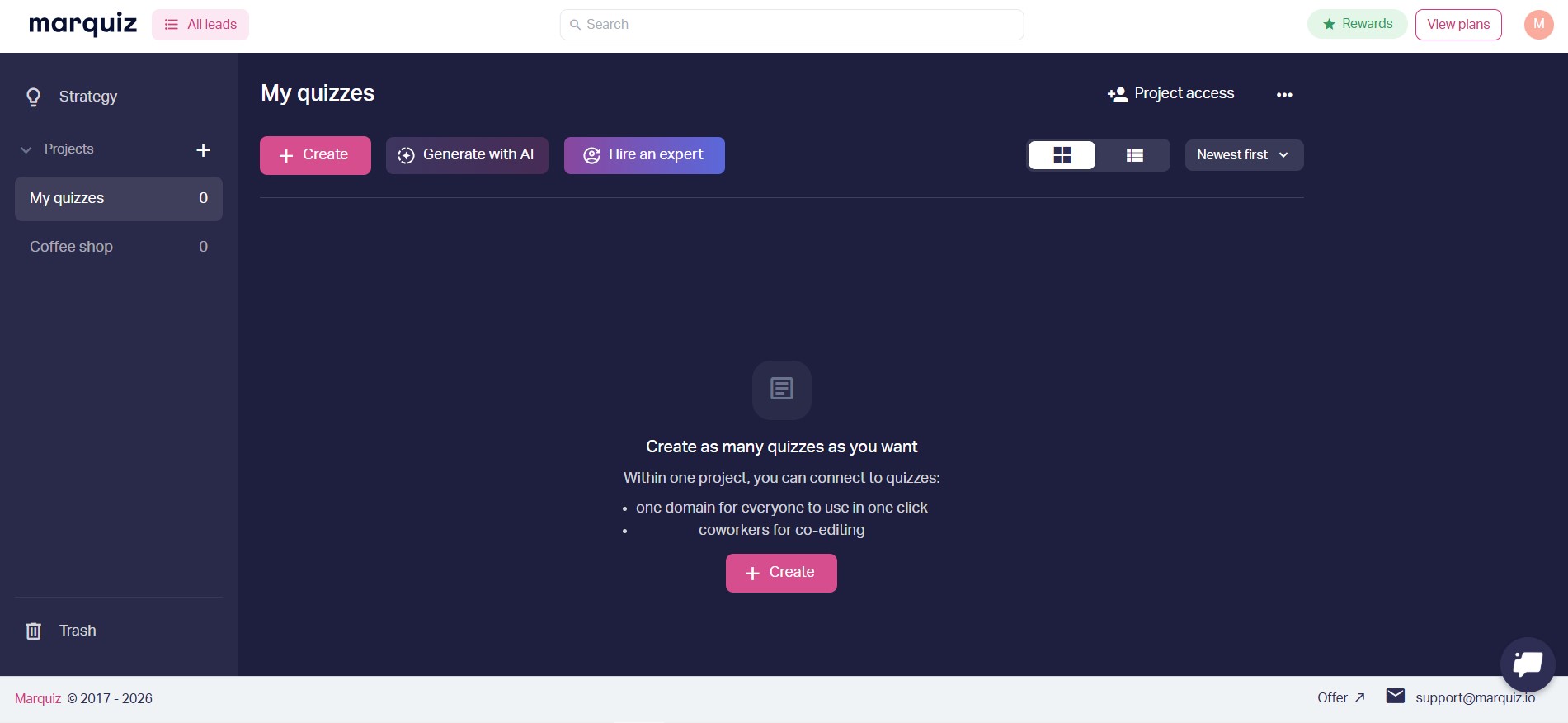
Marquiz is a no-code quiz funnel platform used to capture and qualify leads through interactive question flows.
Lead Generation Workflow
The platform processes lead capture through conditional logic, where each answer determines the next step in the flow. Responses sync with CRM and automation systems through integrations with tools like Zapier and HubSpot. The flows segment users by company size, implementation requirements, use case, or purchase intent before contacts move into CRM records and sales pipelines. It stands out among the best lead generation tools for SaaS because qualification, segmentation, and lead routing happen during the interaction itself instead of after form submission.
Marquiz can be used to build qualification funnels for product selection, pricing qualification, onboarding needs, and feature matching. For example, a project management SaaS can use a quiz to ask about team size, current tools, and required integrations, then direct companies with 50+ employees to an enterprise demo form while smaller teams receive a self-service pricing offer.
Works best for: SaaS companies with multiple pricing tiers, onboarding paths, or qualification-heavy demo requests where sales teams need more context before the first call.
Key Benefits
- Increases conversion rates through interactive lead capture
- Segments leads during the qualification process
- Routes responses into CRM workflows
- Supports branching question flows without coding
- Reduces incomplete form submissions
Limitations
- May add unnecessary steps to very short signup flows
- Less relevant for products with one-step trial activation
Pricing
Free trial available; paid plans start at $19/month.
2. HubSpot — CRM and Marketing Automation Platform
HubSpot combines CRM, email marketing, automation, and sales pipeline management within a single platform. It often sits at the center of lead generation software for SaaS companies where marketing, onboarding, and sales workflows rely on shared customer data.

Lead Generation Workflow
HubSpot records what people do across forms, emails, website visits, and sales conversations, then uses those actions to decide what happens next. Contacts can move between stages automatically, receive different follow-ups, or be grouped by interest level and activity history.
Marketing Hub handles campaigns and email sequences, while Sales Hub keeps meetings, deals, and pipeline updates tied to the same contact records. For SaaS teams, this usually means less manual cleanup between marketing and sales and fewer situations where lead data gets lost between tools.
Works best for: SaaS companies with longer sales cycles and multi-step nurturing.
Key Benefits
- Tracks lead activity across marketing and sales channels
- Automates follow-ups and lifecycle stage updates
- Segments contacts using behavioral and CRM data
- Centralizes interaction history across teams
Limitations
- Pricing rises quickly with scaling contact lists
- Too broad for lightweight SaaS sales setups
Pricing
Free tools available; paid plans start at $20/month, with enterprise pricing available.
3. Intercom — Conversational Platform for Onboarding and Support
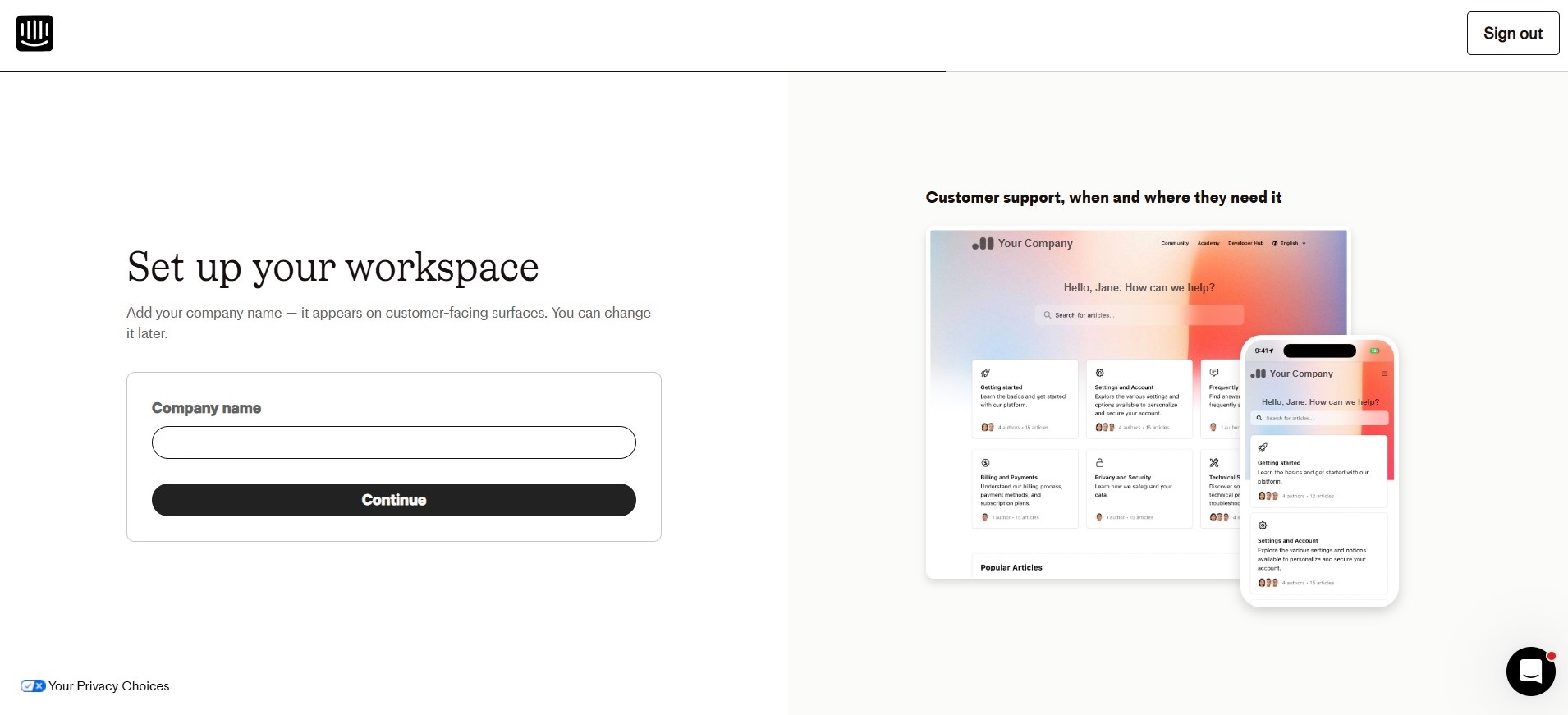
Intercom is a customer messaging platform that combines live chat, AI chatbots, and in-product communication for SaaS onboarding and support workflows.
Lead Generation Workflow
The platform keeps customer communication, onboarding flows, and support interactions connected inside a shared workspace tied to the same user profile. Intercom’s AI agent handles routine questions, routes conversations, and transfers complex issues to human agents when needed.
User activity triggers onboarding checklists, product tours, and in-app messages after incomplete setup actions, repeated feature visits, or other in-product activity. All chat and email interactions are processed through a shared inbox connected to user profiles and activity history.
Works best for: Product-led SaaS models where onboarding, activation, and support happen directly inside the product interface.
Key Benefits
- Routes conversations through AI and live support
- Triggers onboarding flows from user activity
- Centralizes chat and email interactions
Limitations
- Not built for outbound prospecting workflows
- Works best only when users actively engage with the product
Pricing
Free trial; paid plans start at $29/month; enterprise pricing available.
4. Drift — Conversational Lead Capture Platform
Drift is a conversational platform built around chatbots and live chat for real-time lead capture.

Lead Generation Workflow
Chatbots trigger conversations during pricing-page visits, return sessions, and other browsing activity. The platform asks qualification questions, collects contact details, and routes prospects to sales teams inside the same conversation. Meeting scheduling, conversation routing, and follow-up actions run directly inside the chat flow.
Drift also syncs lead data with CRM systems, where conversation history, meeting activity, and lead status stay connected to existing sales workflows.
Works best for: SaaS companies with demo-driven sales processes where high-intent visitors land on pricing or enterprise pages and expect immediate contact with sales.
Key Benefits
- Captures leads through live conversations
- Routes qualified prospects to sales teams
- Triggers chats from behavioral signals
- Syncs lead data with CRM workflows
Limitations
- Relies on high-intent website traffic
- Less effective for low-touch PLG funnels
Pricing
Custom pricing.
5. Typeform — Interactive Form & Quiz Builder
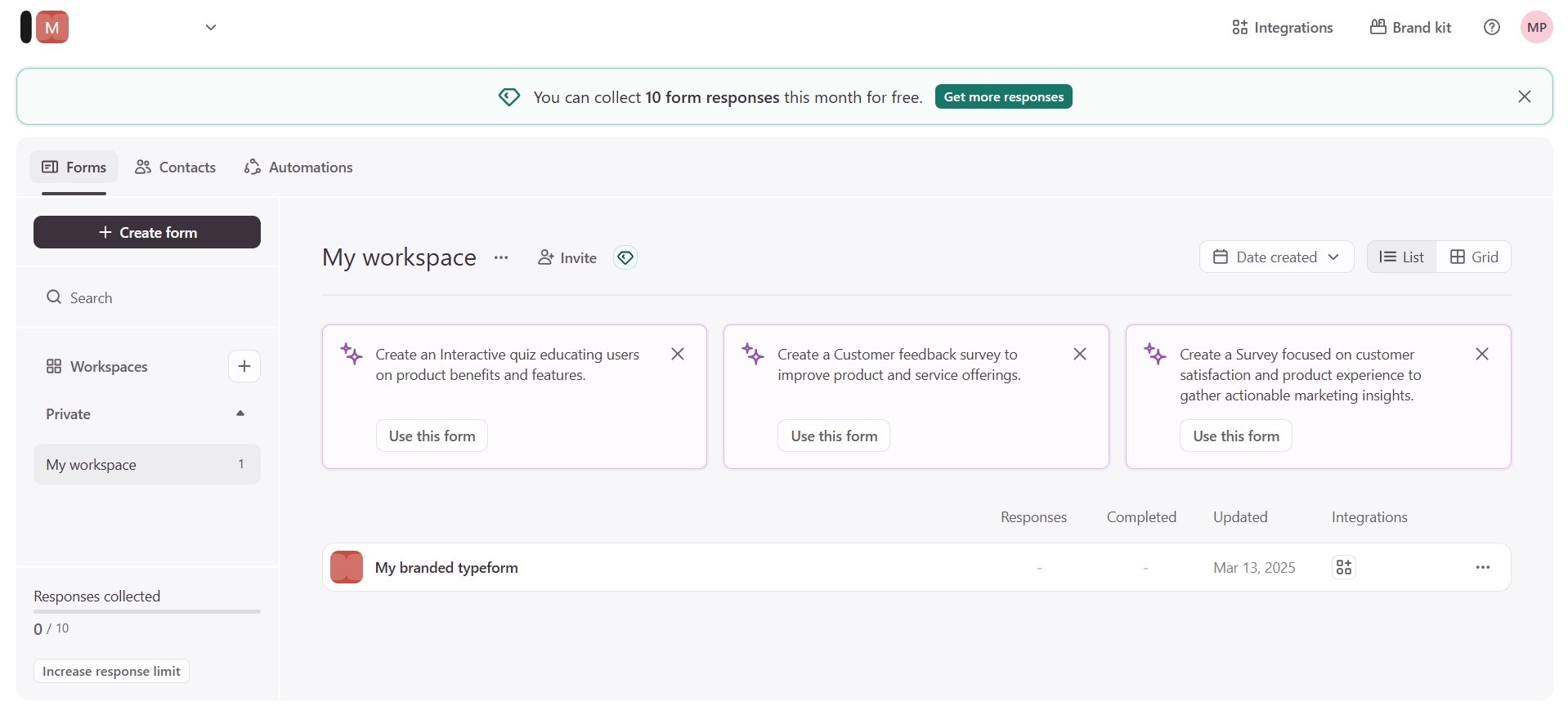
Typeform is an interactive form builder that captures leads through conversational forms, surveys, and quizzes presented one question at a time.
Lead Generation Workflow
The platform uses sequential question flows to collect qualification data during form completion. Conditional logic routes users into different paths based on previous answers, while hidden fields and scoring rules classify submissions before contacts enter CRM records or sales pipelines. Questions can change dynamically depending on role, company size, use case, onboarding requirements, or product interest.
Typeform integrates with CRM and automation platforms, so responses move automatically into CRM records, sales pipelines, or follow-up sequences.
Works best for: Inbound campaigns, lead magnets, and early-stage qualification flows where user experience matters more than deep CRM logic.
Key Benefits
- Reduces drop-offs during form completion
- Segments users through conditional flows
- Syncs responses with CRM workflows
Limitations
- Limited enterprise-level routing logic
- Costs increase with higher response volume
Pricing
Free plan available; paid plans start at $28/month.
6. Leadpages — Landing Page Builder with Built-in Testing
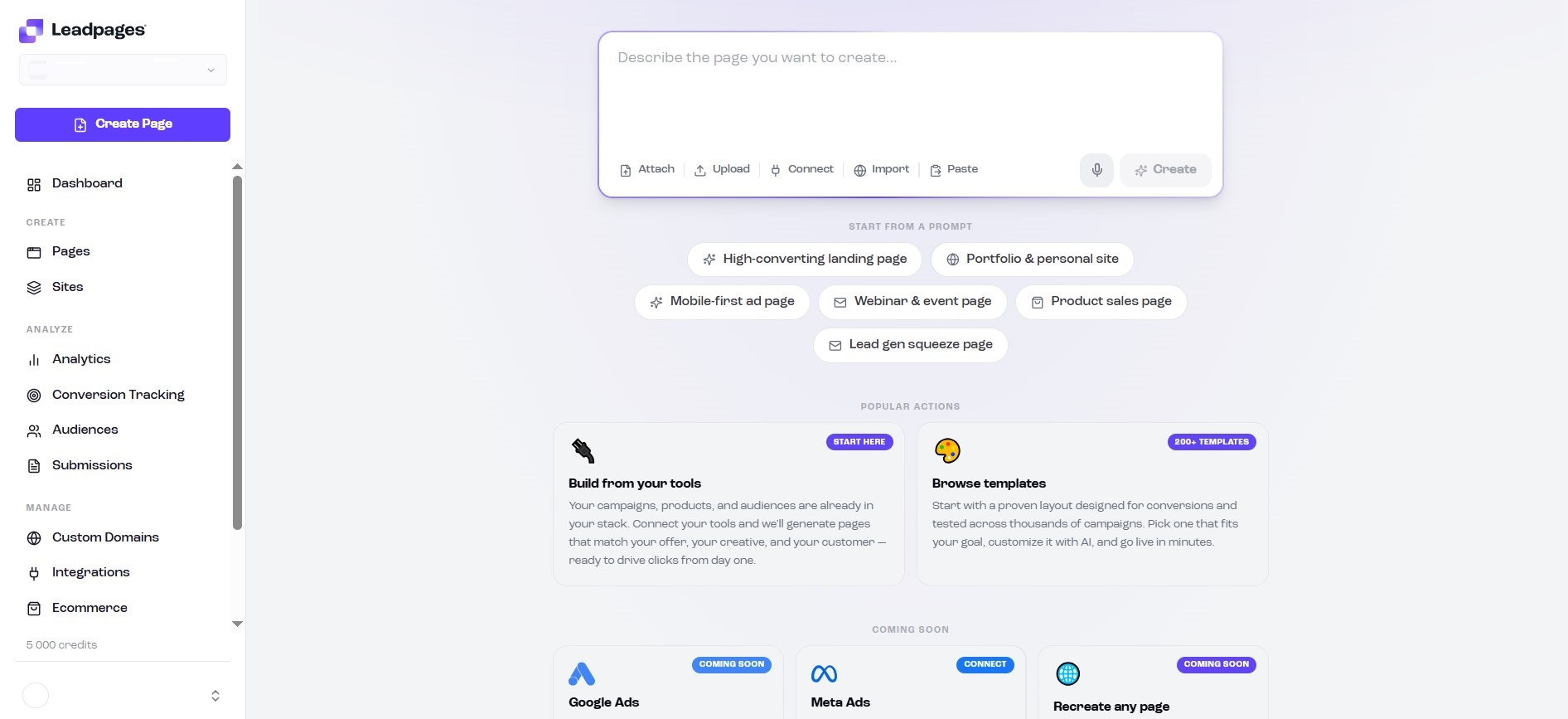
Leadpages is a landing page builder designed for campaign-focused lead capture rather than full website management.
Lead Generation Workflow
The platform creates standalone landing pages with customizable layouts, forms, and lead capture elements that run on connected domains or hosted URLs. SaaS teams use these pages to test messaging and process inbound traffic without changing the main product site. Built-in A/B testing splits traffic between page variants. Differences in headlines, form length, CTA placement, or page structure show up directly in conversion results.
Leadpages connects with CRM and automation platforms, where new submissions move into email sequences, lead records, and sales workflows automatically.
Works best for: PPC-driven SaaS acquisition and rapid landing page testing.
Key Benefits
- Supports A/B testing inside landing page workflows
- Captures leads through standalone campaign pages
- Syncs lead data with CRM systems
Limitations
- Focused more on campaigns than full SaaS funnels
- Limited personalization options
Pricing
Free trial available; paid plans start at $49/month.
7. ActiveCampaign — Email Automation and CRM Platform
ActiveCampaign combines email automation, CRM, and behavioral tracking for SaaS lead nurturing and customer lifecycle management.

Lead Generation Workflow
The platform processes lead activity through event-based automation tied to email engagement, page visits, and form submissions. Triggers, conditions, and branching rules change sequences automatically after pricing-page visits, email activity, or form interactions. Contacts move into different automation paths based on engagement history and funnel activity.
ActiveCampaign also manages SMS campaigns and on-site prompts through the same automation system. The CRM ties email activity, SMS interactions, and on-site messages to deal stages and contact records.
Works best for: SaaS companies with longer nurturing cycles, especially when trial users or webinar leads require ongoing email and SMS follow-ups before conversion.
Key Benefits
- Automates communication through behavioral triggers
- Segments contacts using engagement data
- Connects marketing activity with CRM deal stages
Limitations
- Automation flows require regular maintenance
- Large setups can become difficult to manage
Pricing
Paid plans start at $15/month.
8. Apollo — B2B Prospecting and Outreach Platform
Apollo is a B2B prospecting platform that combines contact data, outbound outreach, and sales engagement workflows in a single system.

Lead Generation Workflow
The platform gives access to a large database of B2B contacts filtered by industry, company size, job role, technology stack, or buying signals. Prospecting workflows stay inside the same system, where teams build lead lists, launch email sequences, track replies, and automate follow-ups without switching between tools. Apollo usually enters the stack once inbound traffic alone stops covering pipeline targets.
The platform also syncs with CRM systems, so outbound activity, engagement history, meetings, and lead status remain connected to existing pipeline workflows.
Works best for: Outbound-heavy SaaS teams targeting specific industries, job titles, or company sizes.
Key Benefits
- Filters prospects using firmographic and activity data
- Automates outbound outreach and follow-ups
- Syncs prospecting activity with CRM workflows
Limitations
- Less useful for inbound-first SaaS models
- Prospect lists still require manual filtering
Pricing
Free plan available; paid plans start at $49/month.
9. Segment — Customer Data Platform for Data Collection and Routing
Segment is a customer data platform focused on keeping behavioral, product, and customer information consistent across SaaS tools and internal systems.

Lead Generation Workflow
The platform captures events from websites, mobile apps, servers, and cloud tools, then routes that data into analytics, CRM, and marketing platforms through APIs and SDKs. SaaS companies use it to track page views, sign-ups, clicks, feature usage, and other product interactions from the same event pipeline.
Segment also combines activity from different touchpoints into unified customer profiles. Those profiles feed onboarding campaigns, CRM records, analytics platforms, and in-product messaging from the same data layer.
Works best for: Larger SaaS environments where product data, marketing tools, and customer activity need to stay synchronized across multiple systems.
Key Benefits
- Centralizes customer data across SaaS tools
- Routes event data through a single pipeline
- Builds unified customer profiles for segmentation
Limitations
- Requires technical setup and event tracking
- Too complex for smaller SaaS stacks
Pricing
Free plan available; paid plans start at $120/month.
10. Zapier — Workflow Automation and Integration Platform
Zapier is a workflow automation platform that connects SaaS applications and transfers data between systems through event-based triggers.

Lead Generation Workflow
Automation runs through Zaps, where activity in one application triggers actions in another. New form submissions create CRM contacts, update lead status, send follow-up emails, and pass data into sales, support, and marketing platforms automatically. Zapier connects CRM systems, databases, forms, and email tools through connected automations.
Filters, branching logic, and multi-step sequences process form responses, engagement activity, and lead status updates across integrated applications.
Works best for: SaaS teams managing multiple disconnected tools without internal engineering resources to build custom integrations.
Key Benefits
- Automates data transfer across SaaS tools
- Syncs lead activity between connected systems
- Reduces manual updates inside CRM workflows
Limitations
- Limited flexibility for highly customized backend workflows
- Multi-app automations can break when connected tools change APIs
Pricing
Free plan available; paid plans start at $19.99/month.
FAQ
What is the best lead generation tool for SaaS startups?
No single option fits every SaaS startup. The choice comes down to how the product is sold and how leads enter the pipeline.
Early setups usually include a basic combination for capturing contacts and storing data, with minimal setup required. As lead volume increases, limitations start to show, especially in tracking interactions, segmenting contacts, and managing follow-ups.
Instead of replacing existing tools, startups tend to add new ones as gaps appear, building a stack that reflects how their sales process actually works.
How do SaaS companies generate high-quality leads?
High-quality leads depend on accurate data collection and filtering. You can capture details such as role, company size, and use case. Segmentation separates relevant prospects early. Automation handles routing and follow-ups, reducing time spent on contacts that don’t match product criteria.
Are quiz funnels effective for B2B lead generation?
Quiz funnels are effective when user intent is unclear. They collect input step by step and produce more complete responses than standard forms. This format helps identify relevant prospects earlier and improves conversion by reducing drop-off during the initial interaction. They also allow teams to capture more context without requiring long forms upfront, which can make early-stage qualification more precise.
What is the average conversion rate for SaaS lead generation?
Conversion rates vary by product and traffic source. For many B2B SaaS websites, they range from 2% to 7%. Lower rates are common for complex products. Performance depends on how clearly the offer is presented and how well the page matches user expectations.
How much should SaaS companies spend on lead generation tools?
There’s no fixed budget. Spend usually grows from what starts breaking first, whether it’s missing data, slow follow-ups, or unclear lead sources.
Early setups stay lean. A form builder, basic CRM, and email tool can fit within $100 to $500 per month at low volume, though this range rarely holds for long as contacts grow or automation is introduced.
As lead flow increases, spending jumps in steps. Adding automation, enrichment, or analytics can push budgets to $1,000–$5,000 per month. In larger setups, tool costs usually take up a small share of the overall marketing budget, rather than being planned as a fixed percentage.
Conclusion
Modern SaaS marketing lead generation tools help companies understand user intent earlier, improve lead qualification, and reduce drop-offs throughout the funnel. Here are the main takeaways worth remembering:
- SaaS lead generation depends on how effectively leads move through each stage of the funnel.
- Complex SaaS products require early understanding of user goals, buying intent, and implementation needs.
- Clear communication around value, integrations, and scalability keeps momentum strong throughout the customer journey.
- Early lead qualification helps teams focus on high-fit opportunities and improve conversion rates.
- Quizzes help SaaS companies capture intent, personalize communication, and qualify leads before the sales conversation even starts.

.jpg)
.jpg)